We taught machines to write like us. Now the question may be whether we still have anything to say.
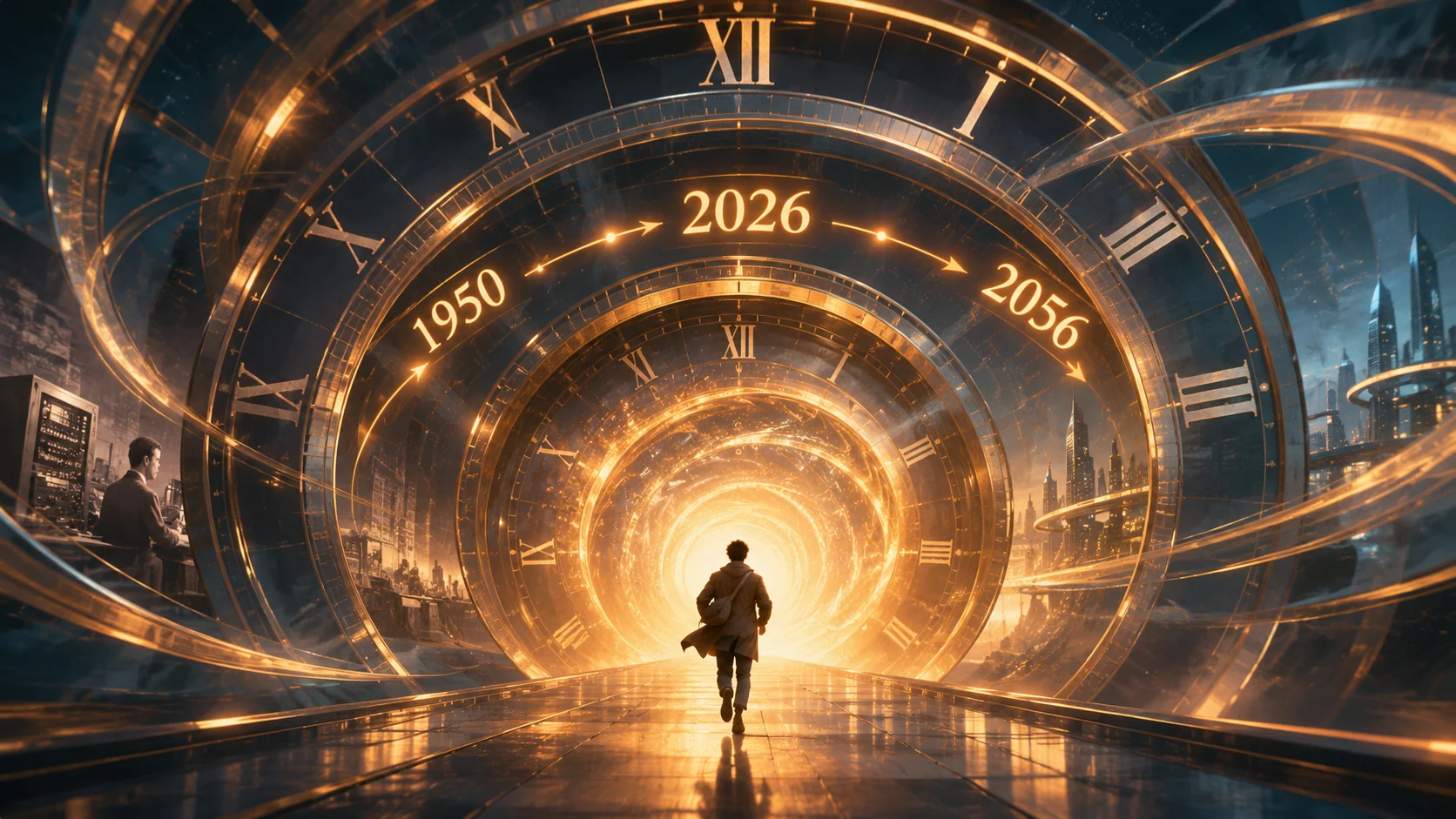
The year is 2056.
My wife is trying to tell me something important. Six words in, an impeccably cheerful voice interrupts to recommend a marital-peace insurance policy.
I can’t complain. I’m on the free tier of marriage. Wife Plus, the ad-free version, is too expensive.
Besides, in fifteen minutes I have to log on for my monthly Reverse Turing Test. On the other side of the screen, an AI will determine whether I can still come up with an original thought, rather than simply remixing everything everyone else has already said.
I’m a little concerned. I just spent ten minutes trying to come up with a convincing answer to “How are you?”
But let’s go back to 2026, when Wife Plus was still just a meme on X.
And while we’re time traveling, let’s make one more stop.
In 1950, Alan Turing proposed a famous imitation game: could a machine converse in a way that made it difficult to tell apart from a person? The question was far subtler than the simplified version we tend to repeat today, but the image stuck.
I’m imagining a somewhat less scientific variation. Not a machine trying to pass for human, but a human being asked to demonstrate that they still have something of their own to say.
This isn’t a technical test. Nor is it a new version of a CAPTCHA, sometimes described as a “reverse Turing test.” It’s a provocation. And to me, the interesting question isn’t who typed the sentence. It’s who actually thought through what it means.
The Price of Words
Today we can produce a presentation, an article, or a business plan in seconds. Clean structure. Flawless grammar. Just the right tone. Often even enjoyable to read.
That’s progress. It saves time, makes previously expensive capabilities accessible, and helps people express ideas they might otherwise struggle to put into words.
But there’s a misunderstanding we may carry forward: making it easier to generate an answer doesn’t automatically make it easier to ask a good question.
Consider a business decision. We’re thinking about entering a new market. AI can help us compare scenarios, gather information, organize assumptions, and even challenge our enthusiasm.
Great. But which market do we choose? Which signals carry the most weight? What don’t we know? Which opportunity are we willing to walk away from?
The memo summarizing the decision might take a minute. A serious decision takes more than a minute—and more than a memo.
This Isn’t a Competition With Machines
The easy response would be to say that AI creates soulless content and human beings, by definition, don’t.
Convenient. Also not very credible.
I’ve read enough human-written material to know that a human byline doesn’t guarantee a thought. And I’ve seen how well-used AI can help sharpen an insight, catch an error, or pressure-test an argument.
AI-assisted writing can be rigorous. Writing produced entirely by a person can be pure filler. Authenticity of origin, quality of the result, and credibility of the claims are three different things.
“Soul” can sound vague when applied to content. I associate it with something less mysterious and more demanding: a recognizable point of view. The ability to notice what others missed, connect it to a real problem, and take responsibility for the conclusion.
A voice doesn’t come from an obligation to write every word by hand. It comes from the choices we make—including what we decide not to delegate.
The Part You Can’t Outsource
Picture an executive presenting a convincing strategy, developed with the help of sophisticated systems.
We ask why that particular course was chosen.
The executive can show charts, cite sources, summarize alternatives. Excellent.
Then we ask: “What would have to happen for you to change your mind?”
Now that’s an interesting question. Not because a machine couldn’t suggest an answer. It could. But because the answer ought to have consequences for the person giving it.
In business, this is where judgment, decision governance, and risk management come in. A plausible conclusion isn’t enough. You need to understand the assumptions behind it, what remains unverified, who is allowed to challenge it, and who is accountable when reality takes a different turn.
AI can reduce the work required to formulate a claim. It doesn’t erase the work required to verify that claim—or the consequences of standing behind it.
And perhaps the real danger isn’t that machines will end up speaking like us. It’s that we’ll get used to speaking before we’ve decided what we mean.
Back to the Future
Come to think of it, my imaginary Reverse Turing Test would make a terrible exam. There’s no infallible way to certify that a thought is original. And a sentence no one has ever uttered before can still be a spectacularly original piece of nonsense.
Maybe a better test is simpler: explain why you chose to say something, what supports it, and what might make you reconsider.
Artificial intelligence may free us from much of the labor of producing words. Not necessarily from the effort of having ideas.
In fifteen minutes I’ll have to answer the examiner.
I just hope my wife can finish her sentence before the next commercial.